

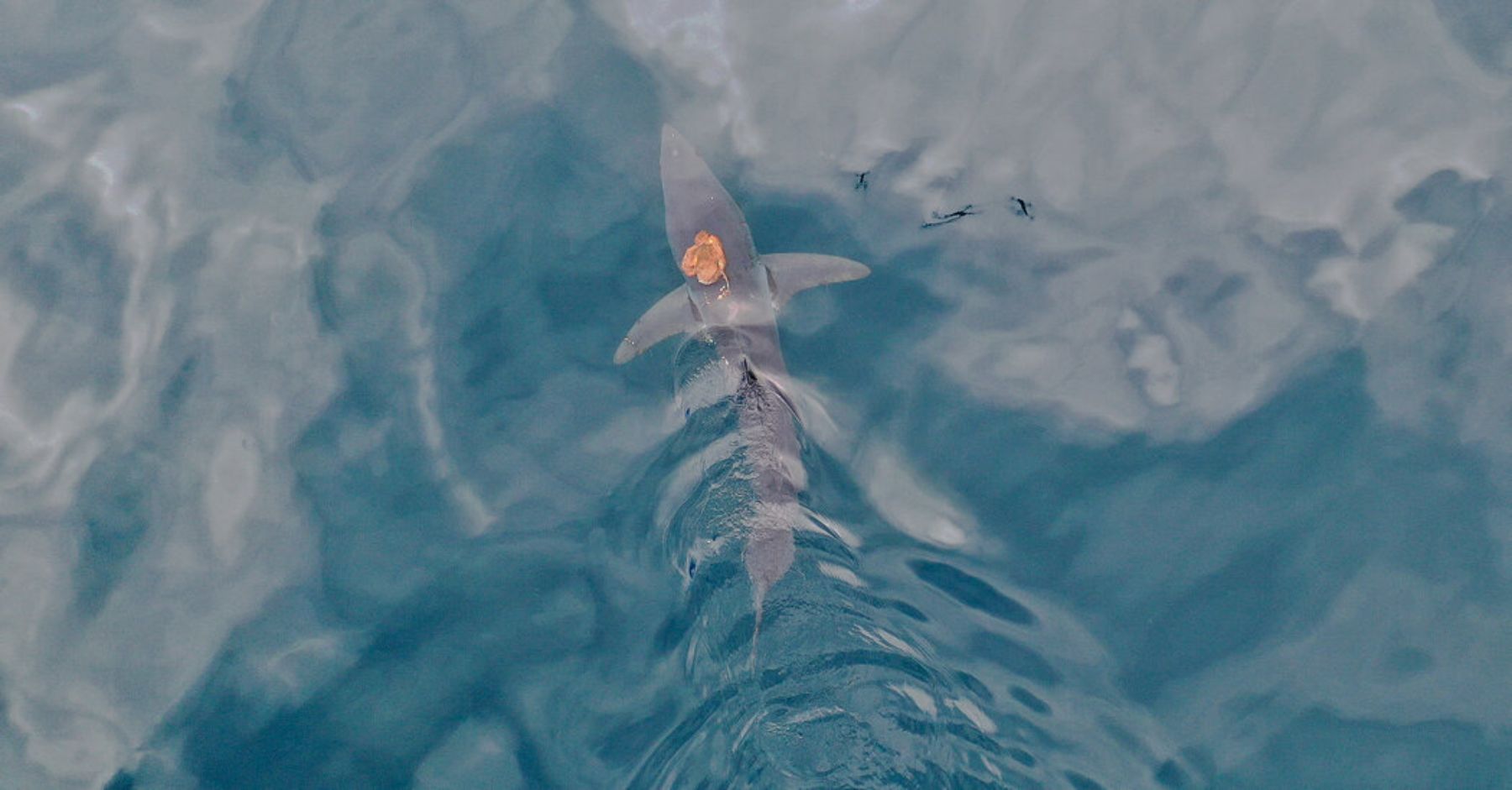
In a truly bizarre encounter off New Zealand’s coast in December 2023, marine scientists observed something rarely seen—an octopus riding on the back of a shark. This “sharktopus” sighting stunned the research team and marine enthusiasts alike, raising intriguing questions about ocean life and marine conservation.
The Discovery: A Maori Octopus and a Mako Shark
The discovery occurred in the Hauraki Gulf, where researchers from the University of Auckland were conducting routine studies. They first noticed an unusual orange patch on a shortfin mako shark. Initially, they thought it might be an injury or fishing gear entanglement. But upon closer inspection with a drone, they realized the “patch” was actually a Maori octopus clinging to the shark’s head.
This particular octopus is the largest species in the southern hemisphere, and it was occupying a significant amount of space on the shark. Researchers were baffled, especially because octopuses typically reside on the seafloor, while mako sharks—one of the ocean’s fastest predators—rarely come near the ocean bottom. The footage, shared by the New York Times, quickly went viral, making headlines all over the world.
Why Is This Behavior So Fascinating?
Marine scientists were quick to highlight the rarity of the situation. Rochelle Constantine, a marine biologist involved in the research, noted that such interactions between a shark and an octopus are highly unusual. She said, “The octopus may have been in for quite the experience, though, since the world’s fastest shark species can reach 50 km per hour.”
The moment underscores the ocean’s vast mysteries and how much is still unknown about marine ecosystems. While we typically associate sharks and octopuses with vastly different habitats, this encounter sheds light on the diversity and adaptability of ocean creatures.
The Role of Sharks in Marine Conservation
This discovery also serves as a reminder of the importance of sharks in marine ecosystems. Often vilified in popular media, sharks play crucial roles in maintaining ocean health by controlling fish populations and supporting biodiversity. As researchers like Constantine suggest, supporting shark conservation initiatives is essential to preserving such remarkable moments in marine biology.
By funding research and focusing on sustainable practices, we can ensure that future generations have the chance to witness more extraordinary oceanic behaviors like the “sharktopus” ride.
Final Thoughts: More to Discover Beneath the Waves
The “sharktopus” discovery is a compelling example of how much we still have to learn about our oceans. It’s a vivid reminder that the ocean’s mysteries are far from unraveled, and the animals that inhabit it continue to surprise us in incredible ways. The research team’s findings also highlight the pressing need for marine conservation efforts to protect these unique ecosystems and the creatures that dwell within them.