

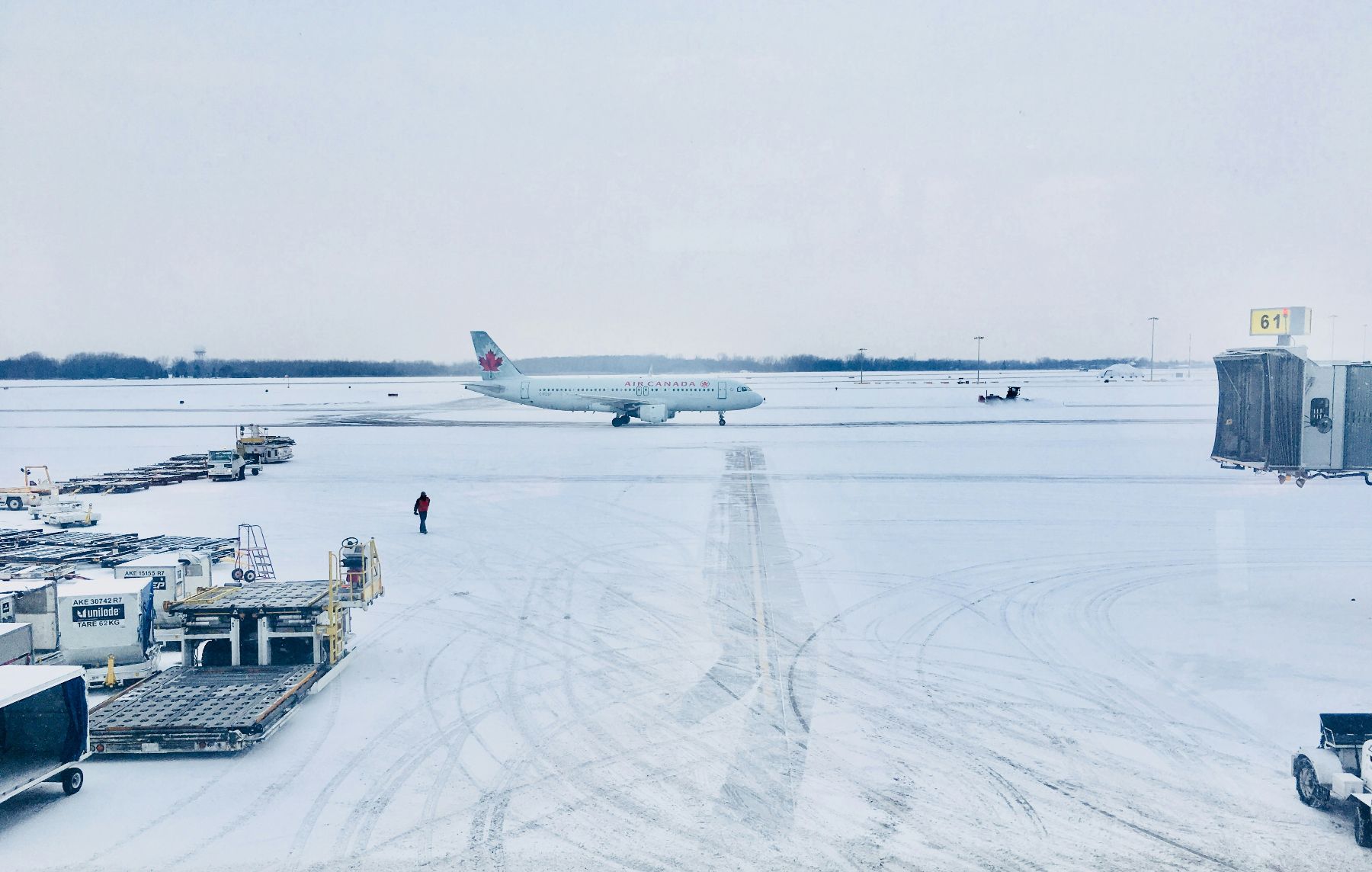
On December 28, 2024, Air Canada Express Flight 2259, a Bombardier Q400 turboprop aircraft, encountered a life-threatening situation when it made an emergency landing at Halifax Stanfield International Airport in Nova Scotia. The flight, which had taken off from St. John’s, Newfoundland, was carrying 73 passengers and crew members, all of whom were thankfully unharmed after the dramatic incident.
The Accident
After experiencing difficulties with the landing gear shortly before its scheduled landing, the aircraft began to veer off the runway. The plane came to an abrupt halt after one of its wings caught fire, adding to the emergency situation. First responders arrived swiftly on the scene, quickly extinguishing the flames and ensuring the safety of all passengers and crew members.
The plane, a De Havilland DHC-8-402, according to the Transportation Safety Board of Canada, skidded down the runway for a significant distance, with passengers observing flames on the aircraft’s left side, as passenger Nikki Valentine shared with CBC. “The plane shook quite a bit and we started seeing fire on the left side of the plane and smoke started coming in the windows,” Valentine said.
No One Was Hurt
Peter Fitzpatrick, a spokesperson for Air Canada, reassured the public by confirming that no one aboard the flight suffered any injuries. According to CBS, he stated that nobody on board was injured, emphasizing the success of the emergency response. All passengers were evacuated safely via buses after the emergency landing.
The incident, which occurred on the same night as another tragic aviation disaster, highlights the potential dangers in air travel, as noted by The Sun. At the same time as the Halifax event, a tragic crash in South Korea claimed at least 179 lives. Additionally, a KLM Royal Dutch Airlines Boeing 737-800 experienced a hydraulic system failure in Norway, leading to an emergency landing. Despite the tense nature of these events, none of the affected individuals sustained injuries.
Following the incident, authorities at Halifax Stanfield International temporarily suspended flights to ensure that emergency operations could be carried out safely. While flight operations have resumed, investigators have begun examining the potential causes of the malfunction in the landing gear system that contributed to the flight’s emergency.
The quick response from Air Canada’s crew and ground support teams, along with the first responders on-site, was instrumental in preventing what could have been a more catastrophic outcome. Investigations are ongoing, but preliminary reports suggest that the malfunction could have been linked to a mechanical issue with the plane’s landing gear.
This event underscores the importance of swift emergency procedures and highlights the ever-present challenges the aviation industry faces. While the incident could have been far worse, it also serves as a testament to the rigorous safety protocols in place. The aviation community continues to evaluate these protocols to ensure that all measures are in place to protect passengers and crew during unforeseen situations.