

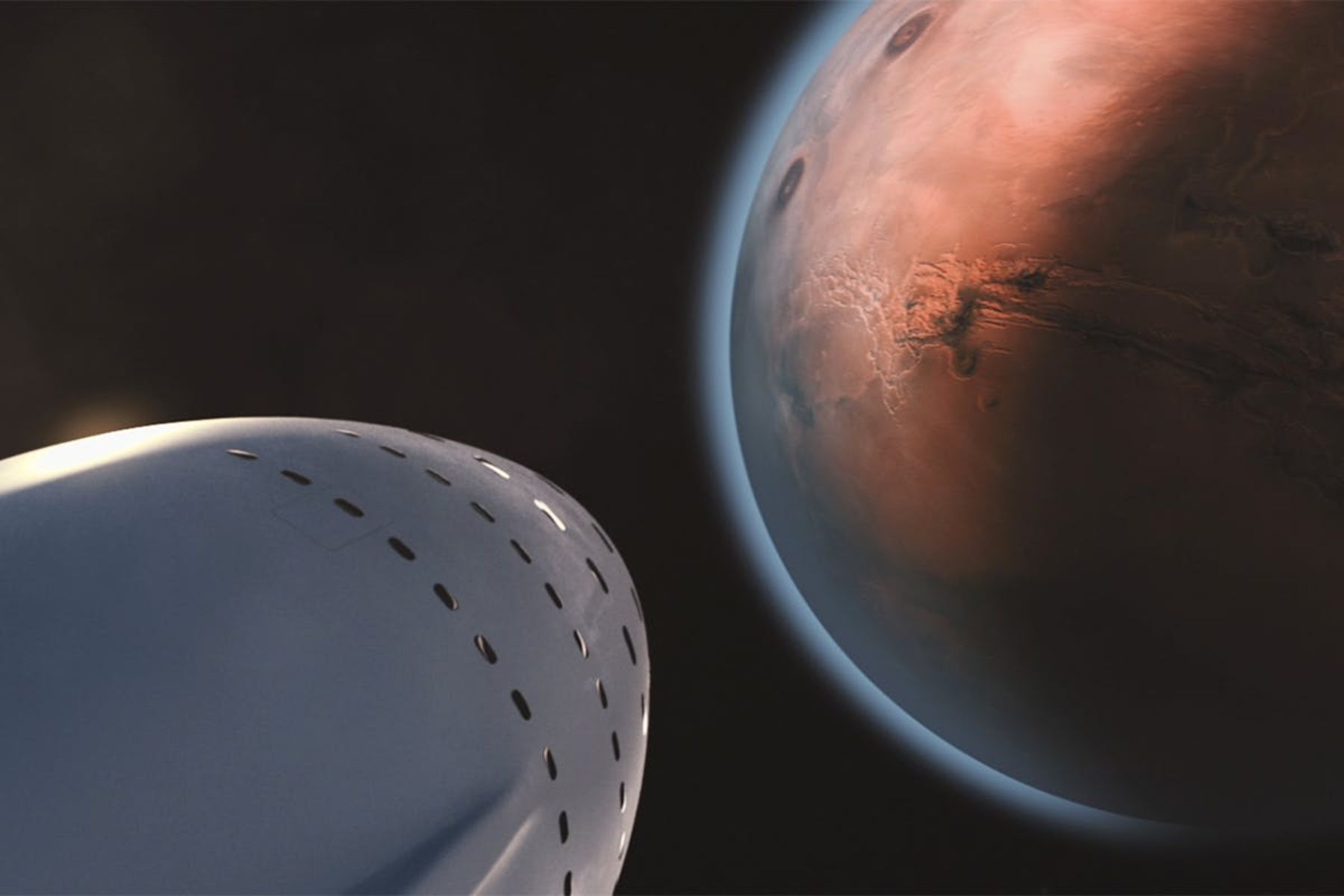
Mars has fascinated astronomers and stargazers for centuries, with its unmistakable reddish hue standing out against the black void of space. But have you ever wondered why the Red Planet is, well, red? It’s not just a striking visual feature; the reasons behind Mars’ color reveal key insights into its past, its atmosphere, and the possibility of life beyond Earth.
A new international study, partially funded by NASA, offers further evidence that Mars once had a cool, wet, and potentially habitable climate in its ancient past, shedding light on how the planet developed its iconic red color. Let’s dig deeper into this captivating question and explore what makes Mars so distinctly crimson.
The Role of Iron Oxide: The Key to Mars’ Red Appearance
At the heart of the mystery lies iron. According to Nature, Mars’ surface is rich in iron minerals, primarily iron oxide – better known as rust. Iron oxide forms when iron reacts with oxygen in the presence of water or moisture. Over billions of years, the iron-rich rocks on Mars have been oxidized, giving the planet its iconic reddish appearance.
Mars’ thin atmosphere, composed mostly of carbon dioxide, doesn’t have enough oxygen to create rust as we see on Earth. Instead, the process is driven by the planet’s mineral-rich surface and its exposure to tiny amounts of oxygen in the atmosphere, along with the influence of solar winds and ultraviolet radiation. This combination leads to a slow but consistent chemical process that results in the widespread iron oxide that gives Mars its red tint.
Mars’ Harsh Environment and the Lack of Water
The lack of liquid water on Mars plays a significant role in its red color. Although Mars was once home to rivers and lakes, much of its water has long since evaporated into space due to the planet’s thin atmosphere and weak gravity. The absence of large bodies of liquid water means the oxidation process on Mars happens much more slowly than it would on Earth.
The presence of water on Mars in the past is still a topic of great interest to scientists. Recent studies, including those from NASA’s Goddard Space Flight Center, suggest that Mars may have had conditions that could have supported microbial life at one point. The iron oxide we see today could be a lingering reminder of that ancient, potentially habitable past.
Solar Winds and Ultraviolet Radiation: A Catalyst for Oxidation
Another factor contributing to Mars’ color is its exposure to solar radiation. Unlike Earth, which is protected by a thick magnetic field and atmosphere, Mars has only a weak magnetic field. This makes the planet highly vulnerable to solar winds – streams of charged particles emitted by the sun. These winds interact with Mars’ atmosphere and surface, accelerating the oxidation process and helping to release oxygen from the soil, further contributing to the formation of iron oxide.
Insights into Mars’ History: A Clue to Its Past Habitability
While the exact mechanisms are still being studied, Mars’ red hue provides valuable clues about its geological and atmospheric history. Researchers continue to investigate the idea that Mars may have once been much warmer and wetter, with rivers and perhaps even oceans that could have sustained life, as noted by CNN. As scientists learn more, it’s becoming clearer that Mars was not always the barren, dry planet we see today.
The study of Mars’ surface materials and their oxidation patterns could also offer new insights into Earth’s history, as similar processes occurred on our own planet in its distant past. Understanding how oxidation has shaped Mars over billions of years could potentially inform how life might have evolved—or failed to evolve—on the planet.
Mars: A Planet With a Colorful Past and a Mysterious Future
The red color of Mars is not just a pretty sight. It tells the story of a planet that once might have been quite different—a place with rivers, lakes, and an atmosphere that could have supported life. Today, Mars’ red hue is a reminder of its transformation into the cold, dry world we observe from our telescopes.
As exploration continues, the mystery behind Mars’ color deepens our understanding of both its past and its potential for future exploration. The more we learn about this enigmatic planet, the closer we come to answering one of humanity’s most profound questions: Was there ever life on Mars, and what does that mean for life on Earth?